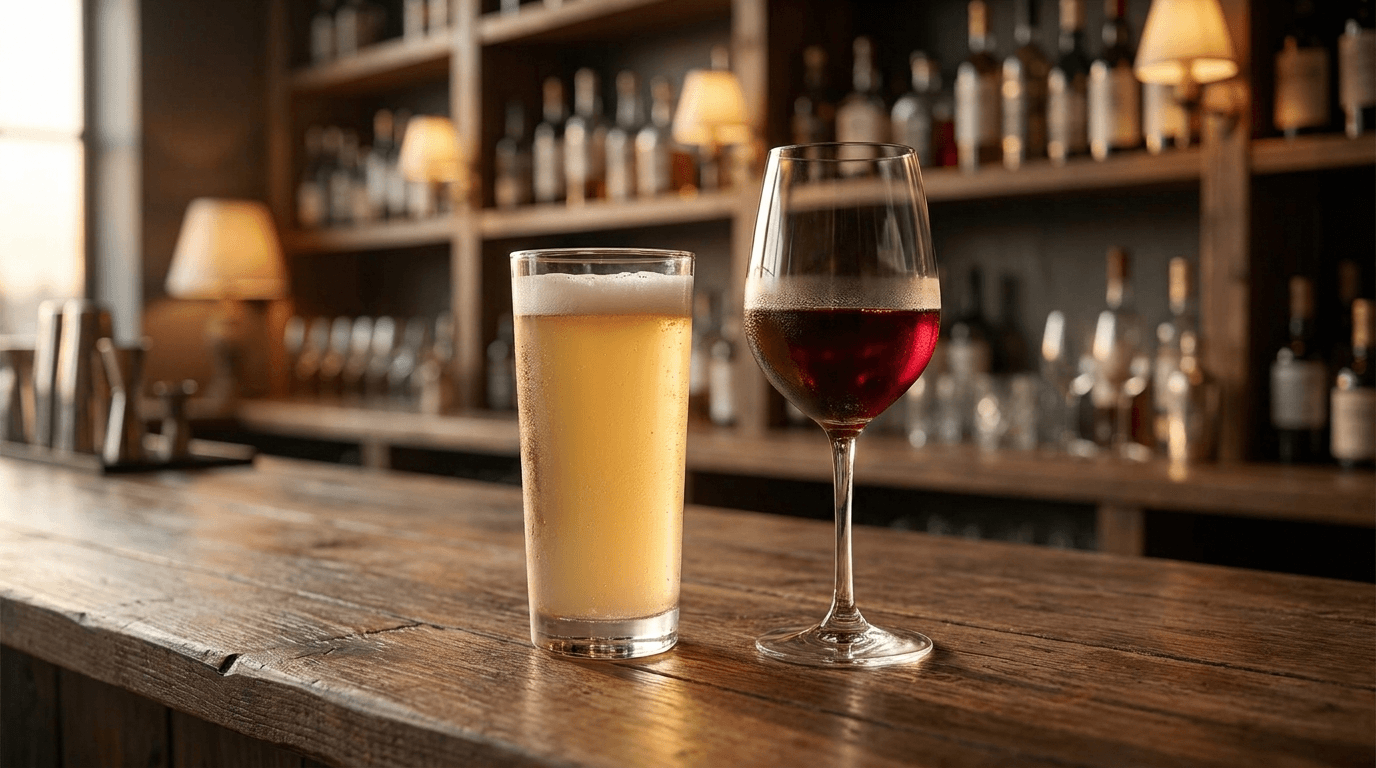
The move away from alcohol is showing up in the sales figures on both sides of the Atlantic. In the United States, sales of nonalcoholic beer, wine and liquor rose 32% from 2022 to 2023 while total alcohol sales grew by just 1%, and almost half of UK adults now buy non-alcoholic beer, wine and spirits. Plenty of those people are switching with their health in mind. So it is worth asking a blunt question: what are the real health benefits of alcohol-free drinks, and do they let you keep whatever was good about the original while dropping the harm? The honest answer is messier than the marketing. Some swaps are a clear win, and some quietly trade one problem for another.
The red wine health story has changed
For years, red wine had a reputation as the one drink your doctor might quietly approve of. In the past, drinking certain types of alcohol, red wine especially, was linked to heart health benefits for some groups of people. More recent research points the other way: drinking less, or not drinking at all, is the best thing you can do for your heart and circulatory health.
The interesting twist is where those supposed benefits came from. Red wine contains polyphenols, and one nutrition expert notes it is possible to see how red wine with greatly reduced alcohol content could help with issues such as cardiovascular disease risk, precisely because you keep the polyphenols and lose the alcohol. That is the whole promise of alcohol-free in one sentence: the good bits without the drawback. Whether any given bottle delivers on it is another matter.
What "alcohol-free" actually means
Start with the label, because it is not as literal as it sounds. In practice, a drink can be sold as "alcohol free" and still contain up to 0.5% ABV. That is the threshold that defines a nonalcoholic beverage in the United States, and Drinkaware confirms a UK drink labelled "alcohol free" could contain 0.5% ABV too. "Low-alcohol" is a looser bracket again, covering drinks of 0.5% to 1.2% ABV, so low-alcohol certainly does not mean no alcohol. UK government guidance does set a tighter bar for the words "alcohol-free", no more than 0.05% ABV, but some drinks carrying that label go up to 0.5% anyway.
Does that trace of alcohol matter? For nearly everyone, no. A can of beer at 0.5% ABV may still give you around a quarter of a unit of alcohol, but you would have to drink about 20 cans of it to reach even two drinks a day. The one clear exception is pregnancy, and there the advice is not to gamble on small numbers, which we come back to below.
Fewer calories, real savings
Here is where alcohol-free earns its keep. Alcohol carries seven calories per gram, not far off pure fat, and taking it out of the glass usually strips a lot of those calories away. A glass of zero-alcohol sparkling wine comes in at around 35 calories, against about 75 for a glass of prosecco at 10.5% ABV. The gap on red is wider still: roughly 30 calories for a glass of alcohol-free red, compared with about 90 for a glass at 12.5% ABV. Over a week, that adds up.
The sugar catch
Calories are only half the story, though, and this is where the marketing goes quiet. Take the alcohol out and something often has to replace the body and flavour it provided, and that something is frequently sugar. A bottle of non-alcoholic prosecco can contain up to 35g of sugar, more than an adult's entire recommended daily allowance of 30g. Some alcohol-free ciders are worse: a bottle of one popular strawberry and lime alcohol-free cider carries over 50g of sugar.
Beer is not immune. Peroni 0.0% has over 18g of carbohydrate a bottle, against 9.9g in the standard version; Erdinger Alcohol Free is higher still at 26.5g a bottle, compared with 13g in the regular one. Wine follows the pattern, with typical values of around 5g of carbohydrate, mainly sugar, per 100ml (3.5 fl oz) for non-alcoholic wine, versus around 1g to 3g per 100ml for most dry alcoholic wines.
There is a sharper, less obvious problem too. Alcohol normally suppresses the liver's own release of glucose, so alcohol-free drinks, lacking that effect, can give you a bigger blood-sugar spike than the equivalent alcoholic drink. One study found that drinking "mixed beer", alcohol-free beer blended with fruit juice or lemonade, raised fasting glucose and triglycerides, which researchers put down to the calorie and sugar content.
“Take the alcohol out and something often has to replace the body and flavour it provided, and that something is frequently sugar.”
Where alcohol-free genuinely helps
Not all the research is a warning. In that same study, alcohol-free pilsner drinkers fared well: their LDL (the "bad") cholesterol and biomarkers of liver damage both fell, without significantly affecting glucose metabolism. Choose your alcohol-free drink well and you can land on the right side of that ledger.
The broader win is simply drinking less alcohol, and a lot of people are. Sales of low-alcohol and alcohol-free drinks doubled between 2020 and 2023, and by early 2024 the top-selling beer at Whole Foods was a nonalcoholic one. Health is part of the pull: Mintel research found that between 15% and 20% of consumers saw health benefits as part of the appeal.
That matters most for the people drinking too much. Among older adults, 40% of men aged 65 to 74 drink more than the recommended 14 units a week in the UK, as do 38% of men aged 55 to 64; among women, 23% of those aged 55 to 64 go over 14 units. For anyone in that group, swapping even some rounds for an alcohol-free version is a straightforward gain.
Read the label, not the front of the bottle
The good news is that the label tells you more than it used to. In the UK, any drink below 1.2% alcohol is required by law to list its ingredients and nutritional information, something alcoholic drinks escape. Use it. Production has improved too: a modern alcohol-free drink is usually made exactly like the standard version, then the alcohol is evaporated under vacuum, so lower temperatures can be used to preserve the taste.
A couple of cautions round it off. Acidic drinks can weaken tooth enamel and encourage decay, so an alcohol-free spritz is not a free pass for your teeth. Some alcohol alternatives also lean on botanicals such as ashwagandha, which has been linked to liver injury and could be harmful during pregnancy. And on pregnancy specifically, the American College of Obstetricians and Gynecologists is blunt: there is no safe amount or type of alcohol use during pregnancy, which is why those trace-alcohol labels matter for one group even when they matter for no one else.
So, should you switch?
The honest verdict is that alcohol-free drinks are a tool, not a health food. Over 80% of people who buy nonalcoholic drinks also buy alcoholic ones, and as of 2022 nonalcoholic products still made up less than 1% of total alcohol sales, so for most people this is about swapping some drinks rather than all of them. Do that and the benefits are real: fewer calories, less alcohol, and a genuine payoff if you have been drinking more than you should. Just pick with your eyes open, because a sugary alcohol-free cider is not automatically the healthier choice. Check the label, favour the drier, lower-sugar options, and let the swap do its work.