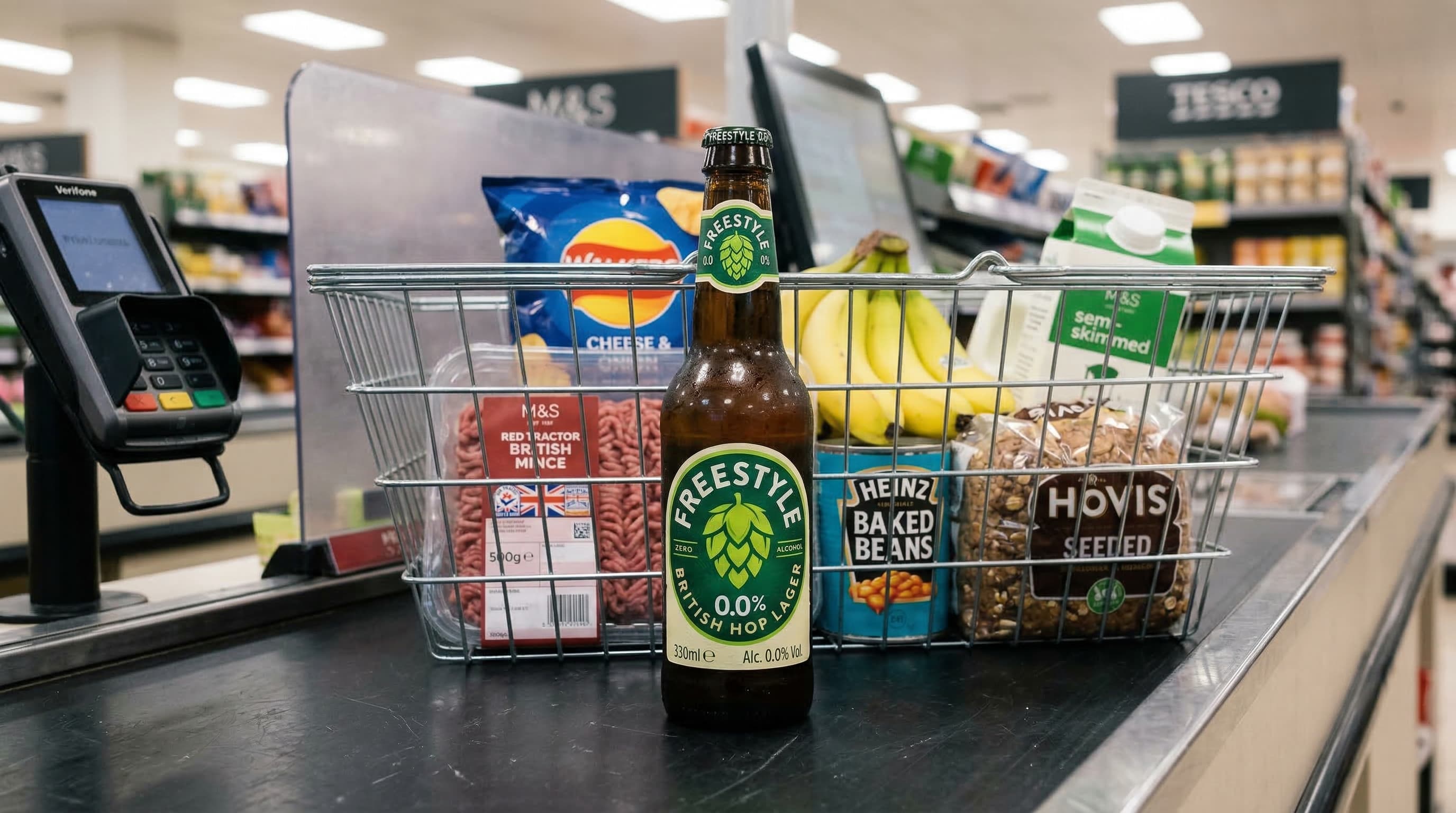
The Office for National Statistics tracks what Britain buys. Every year it updates a basket of 760 items used to measure inflation, adding things people are spending more on and dropping things they're not. This year, alcohol-free beer went in. Premium lager bought in pubs came out.
Read that again. The national statisticians looked at British spending habits and concluded that AF beer better represents how we live now than a pint of premium lager at the pub. That's not a trend piece. That's the most boring confirmation of alcohol-free beer UK market growth you'll ever read.
What the Inflation Basket Actually Is
The inflation basket isn't a list of popular things. It's a model of national spending. The ONS uses it to calculate the Consumer Prices Index, which drives everything from pension increases to wage negotiations. When something enters the basket, it means enough of the country is buying it regularly enough to affect how we measure the economy.
The AF beer inflation basket addition, alongside houmous, motorhomes and dashboard cameras in the 2026 list, tells you something about where British habits are heading. But the real story is what it replaced.
Premium Lager Out, AF Beer In
200m
Pints of low/no beer consumed in the UK in 2025
~20%
Year-on-year growth from 2024
45%
UK drinkers chose low/no in last 12 months (up from 22% in 2021)
£345m
UK non-alcoholic beer market value
32%
Stonegate low/no beer and cider sales jump in Q1 2025
“AF beer didn't sneak into the basket. It kicked the door down”
The ONS doesn't make sentimental choices. Premium lager at the pub was removed because it no longer captures enough of what people spend. AF beer was added because it does.
The numbers back this up. Brits drank an estimated 200 million pints of low and no alcohol beer in 2025. That's up close to 20% on the year before. The alcohol-free beer market has been growing at nearly 15% annually for five years, with the non-alcoholic beer UK production industry now worth an estimated £345 million.
Stonegate Group, one of the UK's largest pub operators, reported a 32% jump in low and no beer and cider sales in the first quarter of 2025. Greene King reported alcohol-free drink sales up 36% over the past 12 months across its 1,600 managed pubs. These aren't niche health food shops. These are high street boozers. AF beer didn't sneak into the basket. It kicked the door down.
Who's Driving Alcohol-Free Beer UK Market Growth?
The easy answer is Gen Z. And they're part of it: three-quarters of Gen Z low-and-no consumers say they're moderating. But framing this as a young people's trend misses the bigger picture.
Around 16% of British adults now say they don't drink at all, up from 12% in 2018. Among those who do, 31% are choosing low and no alcohol alternatives as a way to moderate their drinking. The AF market isn't being built by teetotallers. It's being built by people who still go to the pub but sometimes want a beer that doesn't come with a hangover.
The consumer profile has shifted from 'person who can't drink' to 'person who sometimes chooses not to'. That's a completely different market. And it's why the ONS alcohol-free beer addition sits alongside milk, bread and electricity in the national inflation calculation.
What This Doesn't Mean
It doesn't mean regular beer is dying. According to Vyansa Intelligence, total UK beer market revenue is projected to reach around $35 billion by 2032. AF beer is 2.7% of that market. Significant, growing fast, but still a fraction.
It also doesn't mean AF beer is cheap. Premium positioning is a feature of the category, not a bug. Two-thirds of no-alcohol beer sold is priced at the premium end or higher. You're paying craft prices for craft products, minus the alcohol duty. Though you're also dodging the hidden calorie cost of alcohol. The ONS tracking AF beer prices will actually give us better data on whether the category becomes more affordable over time.
And it doesn't mean the job is done. Most pubs still don't have AF options on draught. Supermarket ranges, while growing, still dedicate a fraction of shelf space to AF compared to alcohol. The basket inclusion recognises where we are. There's a long way to go.
Why It Feels Like a Milestone
Because it is one. The inflation basket is bureaucratic, dry, and unglamorous. Nobody celebrates getting added to a spreadsheet. But this particular spreadsheet reflects what a nation of nearly 70 million people actually spends its money on. When the statisticians say AF beer belongs there and premium pub lager doesn't, they're describing a genuine shift in how Britain drinks.
Five years ago, AF beer was a curiosity. Two years ago, it was a trend. Now it's an economic indicator. That trajectory tells you everything about where this market is heading.
Next time someone tells you AF drinks are a fad, you can tell them the ONS disagrees.