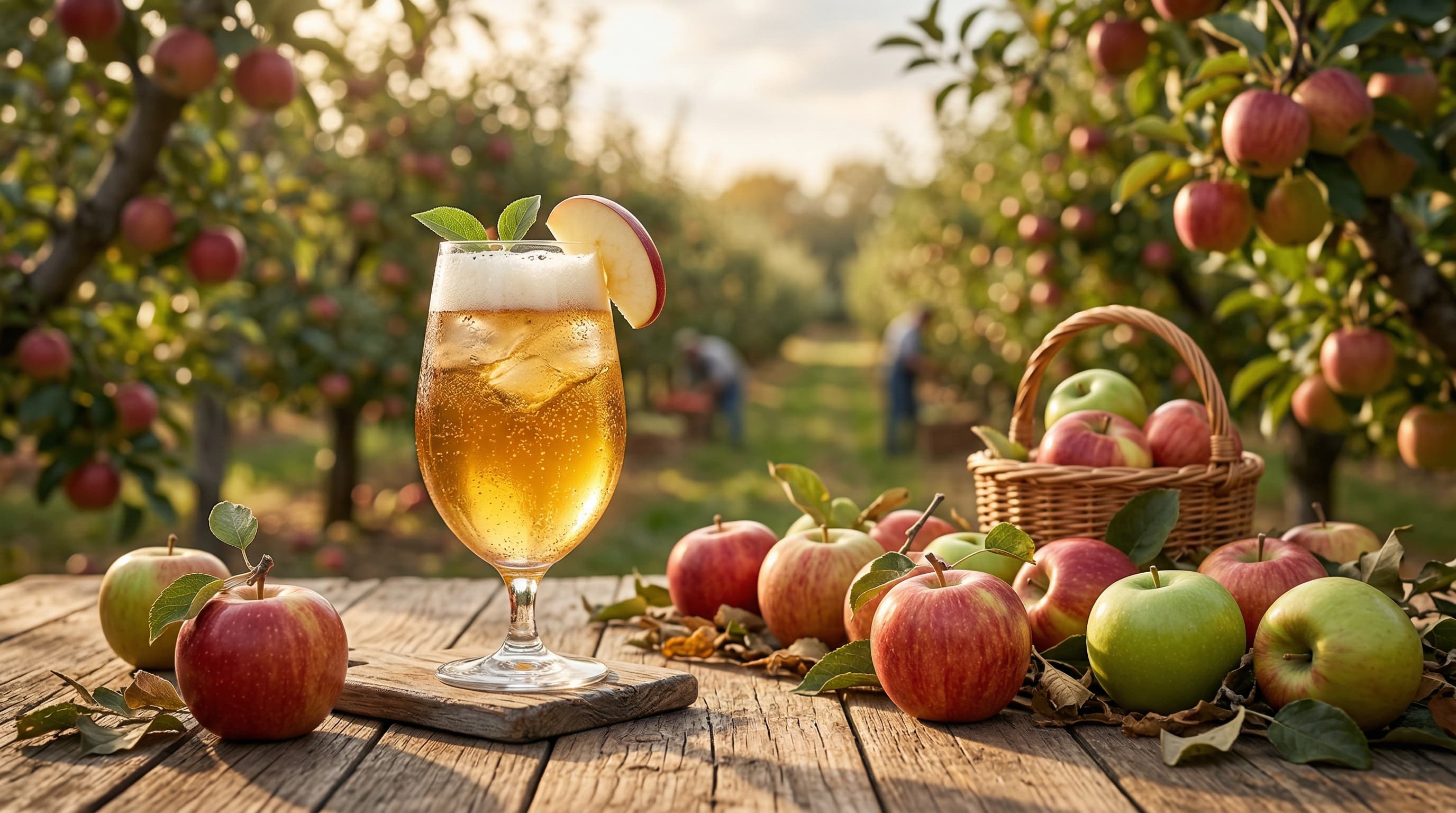
AF beer gets the headlines. AF spirits get the hype. But quietly, without much fuss, alcohol-free cider has become one of the most reliably good categories in the no-and-low world. The reason why alcohol-free cider tastes good is straightforward, and it starts in the orchard.
The science behind why alcohol-free cider tastes good
Every AF drink faces the same basic challenge: alcohol carries flavour, adds body, and changes how your mouth perceives a drink. Remove it, and you lose more than just the booze. But cider has a natural advantage that beer and wine don't.
First, cider starts at a relatively low ABV, typically 4-8%. Compare that to wine at 12-15% or spirits at 35-50%. The less alcohol you need to remove, the fewer volatile flavour compounds you lose in the dealcoholisation process. BevZero, a leading dealcoholisation specialist, says both cider and wine hold up extremely well to low-temperature vacuum distillation, and notes that cider's fruit-forwardness can be more resilient than some wine varieties.
Second, and this is the crucial bit: cider's character comes from apples, not from alcohol. The malic acid that gives cider its tartness is already in the fruit before fermentation even starts. The fruity esters that drive aroma (compounds like ethyl acetate) are built during fermentation by the yeast, not by the ethanol itself. Once those esters are formed, they stay in the liquid even after the alcohol is later stripped out. Take the alcohol away and the apple is still right there.
“Take the alcohol away and the apple is still right there”
Why award-winning AF ciders deliver
- Sandford Orchards: Red Zero Product Page
- Sandford Orchards: Can No Alcohol Cider Taste as Good as the Real Thing?
- NACM: Best No-Alcohol Cider in the World
- Drinks Retailing News: International Cider Challenge 2024 winners announced
- Food4Media: Crafty Nectar 0.5, The Unicorn of the Alcohol-Free Market
- Bar Magazine: Introducing CHANCE Clean Cider
The proof is in the awards. Sandford Orchards Red Zero, a Devon craft cider made from Farmers Glory, Dabinett and Sweet Alford apples, has collected what Sandford Orchards describes as more than a dozen international honours. Those include Best Alcohol Free Cider in the World at the World Alcohol Free Awards 2026 and Best Non-Alcoholic Cider at the World Cider Awards 2025.
The alcohol is removed at 2°C using a cold filtration method. It's a proper fermented cider with the alcohol removed afterwards, and drinkers describe juicy apple richness, a clean finish and a hint of sweetness that stays true to full-strength cider.
Crafty Nectar won the Low & No-Alcohol Cider Trophy at the International Cider Challenge 2024. Crafty Nectar says it blends fresh-pressed cider with west country apple juice, producing a medium-sweet 0.5% with apple character intact. And Chance, which positions itself as the UK's first dedicated non-alcoholic cider brand, starts with an 8.2% ABV cider before carefully reducing it to 0.5%, retaining notes of crisp apple, citrus and even light woody complexity.
Best in the World 2026
Sandford Orchards Red Zero
4-8%
Typical cider ABV (vs 12-15% for wine)
Filter-extracted at 2°C
Sandford's dealcoholisation method
“These aren't sugar-water apple drinks. They're real ciders that happen to have the alcohol removed.”
Fruit ciders: the AF sweet spot
If traditional AF ciders work well, fruit ciders work even better. All cider starts with apples. Fruit ciders like Kopparberg and Rekorderlig add strawberry, mixed berry or tropical flavourings to that apple base. The result is a double layer of fruit character: apple foundation plus added fruit, which means there's even more flavour to survive the dealcoholisation process. This is why these brands have had such an easy time producing AF versions of their ranges.
Kopparberg has been in the alcohol-free cider game for well over a decade, expanding from a single AF pear variant into a full range covering its core flavours. Rekorderlig's Strawberry and Lime AF is a summer staple. Globally, no-alcohol now makes up around two-thirds of the no/low-alcohol category, with beer and cider together accounting for the bulk of that volume.
The fruit cider trend also explains why alcohol-free cider appeals to a broader audience than AF beer. If you're not a beer drinker, even a great AF IPA probably won't convert you. But a cold AF Kopparberg on a summer afternoon doesn't require any acquired taste at all.
What to try
- Craft cider: Sandford Orchards Red Zero. Multiple international awards, including Best in the World at the 2026 World Alcohol Free Awards. Available at specialist AF retailers and selected supermarkets
- Budget-friendly: Thatchers Zero. The Somerset producer's first AF release, with reliable quality across the range
- Fruit cider: Kopparberg AF in any flavour. The Mixed Fruit is particularly good
- Something different: Crafty Nectar 0.5%. Fresh-pressed cider blended with west country apple juice, zingy and medium-sweet
- New kid: Chance Cider. 100% British apples, reduced from an 8.2% ABV cider down to 0.5%, with crisp apple, citrus and woody notes
For more picks, see our best alcohol-free cider roundup.
Cider is the category where the gap between "with alcohol" and "without" is smallest. The reason why alcohol-free cider tastes good? It was never the alcohol. It was always the apple.