Alcohol-free beer is brilliant. Alcohol-free gin is convincing. Alcohol-free wine is trickier, and the science explains why. The good news: a different category of alcohol-free wine alternatives, built from scratch instead of stripped down, often works better than the dealcoholised bottles you've already tried.
Why dealcoholising wine is so much harder than beer
Beer typically sits at 4-6% ABV. Wine starts at 12-15%. That's a much larger amount of alcohol to remove, and the process drags too much else out with it.
Vacuum distillation boils off the ethanol at low temperature, but it strips the volatile aromas at the same time. Peer-reviewed comparisons of full dealcoholisation show vacuum distillation losing 96-98% of esters and 85-95% of higher alcohols, the compounds that carry fruit and floral notes. Reverse osmosis is gentler, but it still pulls out roughly 81-92% of esters along with organic acids and other structural compounds, leaving a wine that feels thinner and less complex than it started.
The structural void left by removing that much alcohol is simply too large to paper over. Ethanol does more than carry alcohol percentage; it adds body, lifts aroma into the air above the glass, and balances acidity and bitterness on the palate. Take it out and the perception of those elements changes: astringency and acidity become more pronounced, fruit recedes.
“The structural void left by removing that much alcohol is simply too large to paper over”
The colour divide: whites survive, reds struggle
Not all dealcoholised wine fails equally. The pattern is consistent across tastings and the science.
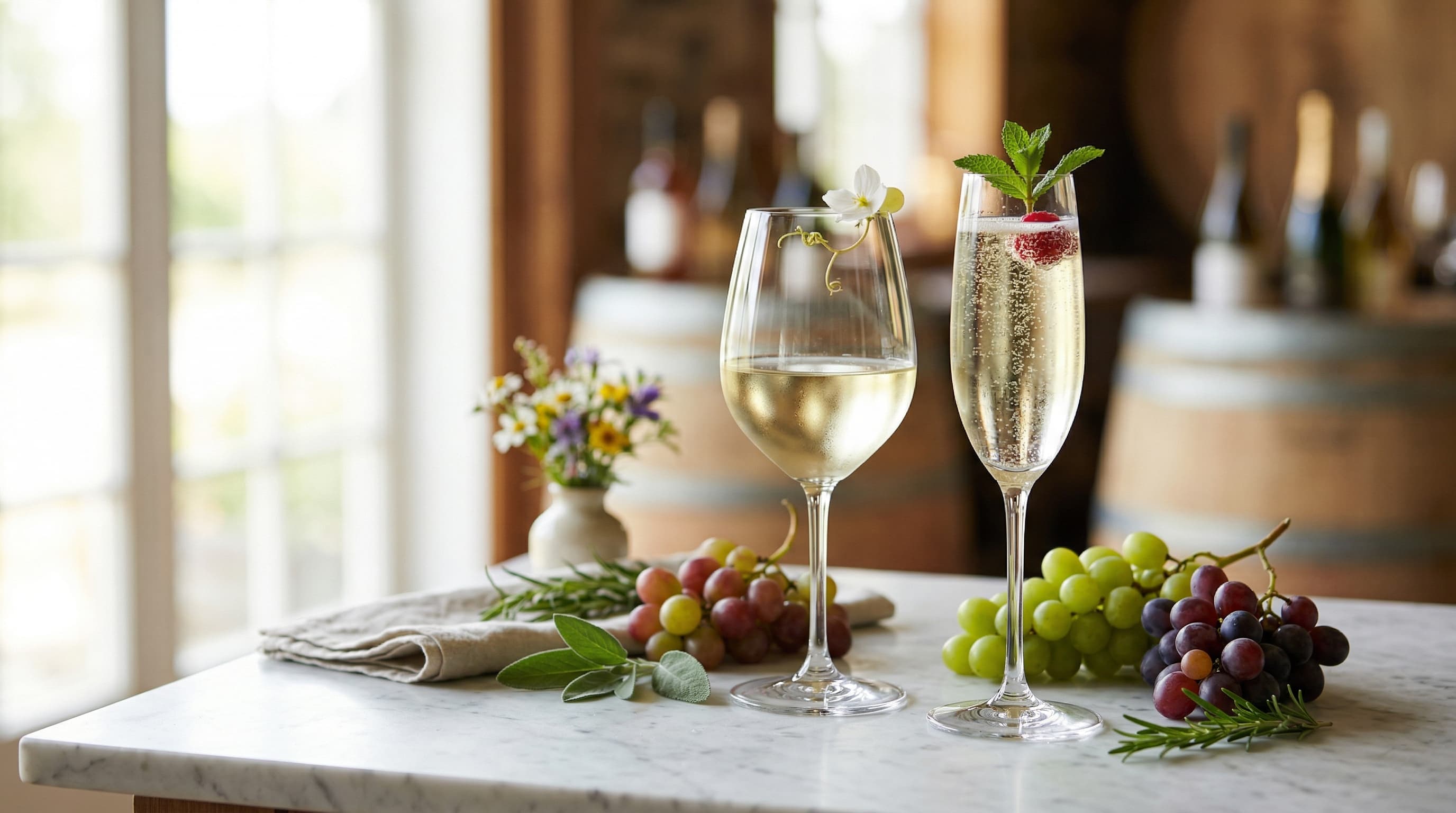
Sparkling AF wine is the standout performer. Bubbles do remarkable work: CO2 rising through the glass launches tiny aromatic plumes into the air above it , and on the tongue carbonation provides the tactile texture and aroma-lift that fine, persistent bubbles depend on.
In a sparkling alcohol-free wine, that bubble quality has to do twice the structural work. The most credible non-alcoholic sparklings, including Thomson & Scott Noughty and Oddbird, prioritise fine, persistent carbonation.
Still whites hold up reasonably well, particularly aromatic varieties. Grapes like Muscat, Riesling and Sauvignon Blanc start with such a high concentration of monoterpenes, the compounds behind their floral character, that enough of it survives the process. They dominate the more reliable non-alcoholic wine on UK shelves for a reason: Torres Natureo Muscat, made from Muscat of Alexandria, is the easiest example to find.
Rosé translates surprisingly well too. Summer fruit notes (strawberry, apricot) seem resilient to dealcoholisation. Noughty Sparkling Rosé is a reliable UK pick if you want something with bubbles.
Still reds face the biggest challenge. Red wine relies on a careful balance of tannins, anthocyanins (the pigment compounds) and ethanol; both behave differently when alcohol is removed, hitting both colour and the astringency-bitterness balance the wine depends on. Some producers lean heavily on oak to compensate, which can overpower the fruit. The best dealcoholised reds (Zero Regrets Primitivo, Noughty Rouge) lean into fruit-forward styles where the grape character carries the drink rather than relying on structural complexity.
**12-15%**
ABV removed from wine, vs 4-6% from beer
High
Parity rating for sparkling AF wine
Low-Medium
Parity rating for still red AF wine
The proxy revolution: a different kind of alcohol-free wine alternative
Instead of trying to strip alcohol from wine and hoping something drinkable remains, a new category has emerged: wine proxies. These aren't dealcoholised wines at all. They're built from the ground up using botanical extracts, teas, juices and vinegars, designed to perform the same function as wine at the dinner table.
The approach focuses on four elements that make wine work with food: balance, acidity, texture, and length.
For acidity, producers reach for verjus, lemon juice or apple cider vinegar: sharp, food-cutting acids that carry through cooked sauces. For texture and tannin, they turn to teas, especially Oolong and the smoky Lapsang Souchong, which add the same astringent grip. For complexity, expect ingredients like pink peppercorns, hibiscus, chamomile and rooibos.
The mental shift required is simple but important. Stop looking for a "Cabernet dupe." Start looking for a "savoury red" or a "bright floral white." Proxies don't taste exactly like wine. But they provide a more satisfying food pairing than most dealcoholised wines because they actually have the weight and intensity that dealcoholisation removes. Acid League is widely credited with popularising the wine proxy category through its Proxies range in Canada; UK availability is still patchy, but the concept has spread, and more producers are following.
Where alcohol-free wine alternatives actually shine
- With dinner: Skip dealcoholised red wine entirely. Reach for a wine proxy designed for food pairing if you can find one. Or, for a real grape, try Zero Regrets Primitivo or Noughty Rouge for fruit-forward styles
- Celebrations: Sparkling alcohol-free wine genuinely works. Noughty Sparkling Chardonnay or one of Oddbird's bottles and you're sorted
- Casual sipping: AF white wines are decent, especially aromatic varieties. Torres Natureo Muscat is the reliable choice
- Summer: AF rosé is consistently better than you'd expect. Try it properly chilled. Noughty Sparkling Rosé is the easiest UK pick
The AF wine problem is real, but it's narrowing. The dealcoholised category is improving, the proxy category is adding options that didn't exist two years ago, and sparkling alcohol-free wine has been quietly excellent for a while. The trick is knowing which styles already shine (sparkling, aromatic whites) and where to look when you want something for the dinner table. Browse the full alcohol-free wine category to see what's on UK shelves right now.