Pop Cultures
Most kombucha is made from black tea and refined sugar. Pop Cultures doesn't use either.
The Brighton-based brand makes jun kombucha — a less common variant that uses organic honey and green tea as its fermentation base. The distinction matters more than it might appear on a label. Black tea kombucha tends to be sharper and more tannic; jun, made with green tea and honey, is typically more delicate, with a lighter acidity and a floral depth that comes partly from the honey and partly from the gentler tannin profile of the green tea. It's a different drink, not just a different recipe.
Pop Cultures also barrel-ages their brew in oak, which is unusual even within the small world of jun production. The oak contact adds a faint woody complexity and contributes to a funk that's more winelike than the average kombucha. After the base fermentation in oak, the kombucha is moved to glass jars with added fruit and spices for a secondary ferment that builds natural carbonation. No forced carbonation, no artificial flavourings.
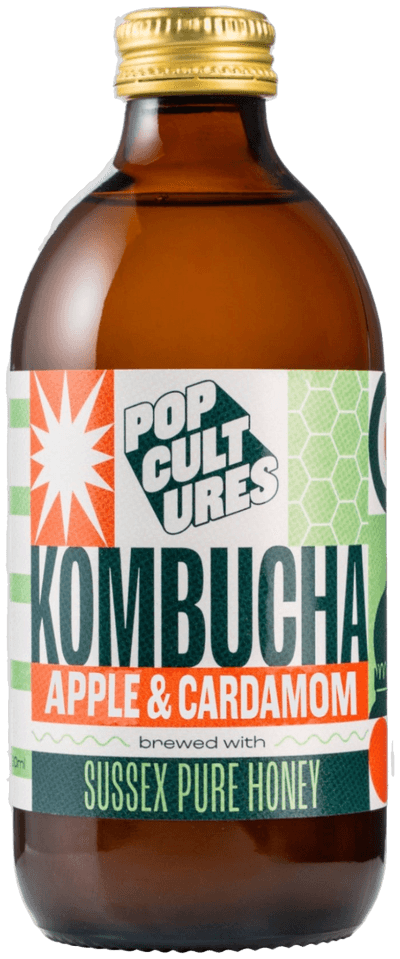
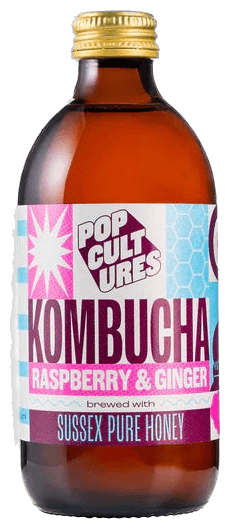
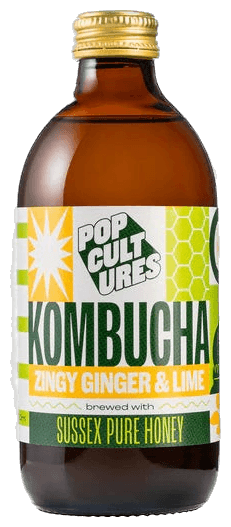
The result is a drink that sits somewhere between craft kombucha and natural wine in terms of how it's made and the kind of attention it rewards. Zingy Ginger and Lime is the flagship, and the one that won a two-star Great Taste Award. The ginger is present and assertive rather than decorative, and the lime brings a citrus freshness that balances the earthiness of the base. Apple and Cardamom is the quieter, more meditative option: the cardamom is subtle, more of a warmth than a flavour, and it pairs well with the light sweetness the apple brings. Raspberry and Ginger completes the current range, and pulls the whole thing in a fruitier, more immediately approachable direction.
The batches are small by necessity as much as by choice. The barrel ageing and the glass jar secondary ferment don't scale easily, and Pop Cultures hasn't tried to make them. The brand is available through specialist AF and craft drinks retailers rather than mainstream supermarkets, which reflects both the price point and the production constraints.
What Pop Cultures represents is a specific corner of the kombucha market: the part that takes the fermentation process as seriously as a brewer takes their beer. Jun kombucha is niche even within the kombucha world, and barrel ageing it further narrows the target audience. The people who buy it are largely the same people who read the label on a natural wine bottle or ask how the coffee is sourced — drinkers who find process interesting rather than intimidating.
It's not for everyone. The funk is real, the flavours are less sweet than many commercial kombuchas, and the price reflects small-batch craft production. But for a non-alcoholic drink that actually has something interesting going on, Pop Cultures is one of the more genuinely distinctive options in the UK market.
At a Glance
- Origin
- UK
- Price Point
- Premium
- Website
- popcultures.co.uk
Ships to
UK
The Collection
4 drinksAt a Glance
- Origin
- UK
- Price Point
- Premium
- Website
- popcultures.co.uk
Collection
4 drinks
- Wine3
- Soft Drinks1