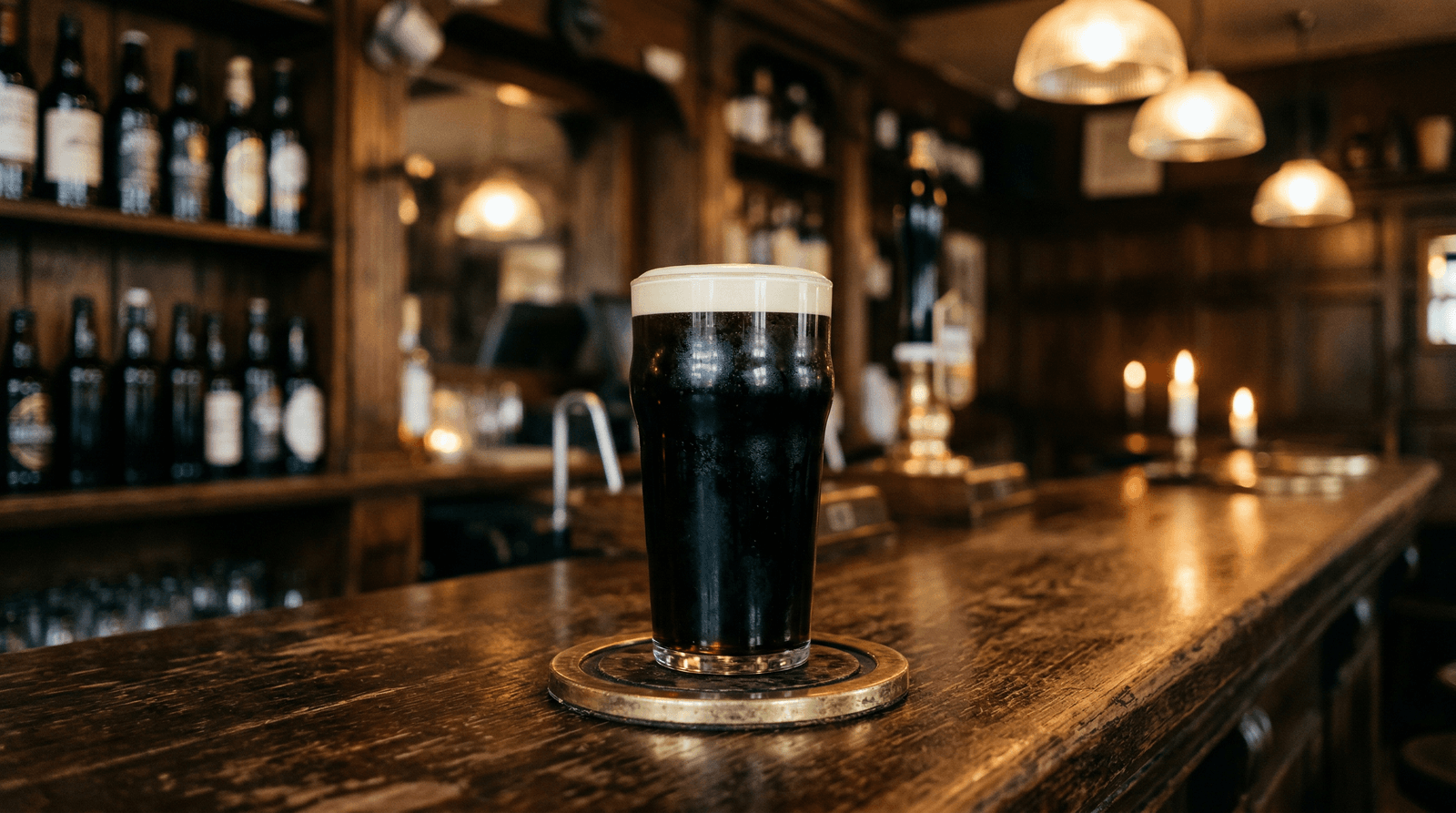
Walk into any decent pub in Britain and look at the taps. If there's an alcohol-free option, odds are it's Guinness 0.0 draught. Not a craft startup. Not a wellness brand with pastel packaging. A brewery founded in 1759 that put its alcohol-free stout on the tap and built the first proper AF pub pour in the process.
**£48.4m**
Annual UK supermarket sales value (NielsenIQ data to July 2025)
**53%**
Share of Guinness deliveries at Ocado that are 0.0
The pub problem nobody else solved
Here's the fundamental issue with AF beer in pubs. For years, if you wanted one, you got a bottle. Maybe a can if you were lucky. Either way, it arrived looking different from everyone else's drink. You were marked out as the person not drinking. That sounds trivial, but it matters more than the industry admitted for a long time.
Guinness took a different approach. They put 0.0 on the actual taps. Draught. Poured from a font into a proper pint glass, with the same cascading settle and creamy head.
The Devonshire in Soho was the first venue in Soho to serve draught Guinness 0.0, with Peter Crouch pulling the first pint at the launch on 28 August 2024. By late 2024, Diageo had expanded Guinness 0.0 draught trials to pubs and bars across Great Britain and Premier League football stadiums in England. The company called the rollout "a momentous moment for on-trade expansion in the UK" (trade-press shorthand for getting it into pubs and bars rather than supermarkets).
That word "momentous" is doing a lot of heavy lifting, but they're not wrong. When the AF pint looks identical to everyone else's, the social dynamic changes completely.
The widget that makes cans work
Not every pub has 0.0 on tap yet. That's where Guinness's secret weapon comes in: the nitrogen widget.
It's a small hollow plastic sphere sitting at the bottom of every can. During production, the can is filled with beer and nitrogen under pressure. Beer is forced into the sphere through a tiny hole, compressing the nitrogen inside. When you crack the can open, the pressure drops. The compressed nitrogen blasts the beer back out through that hole, creating thousands of tiny bubbles that cascade through the liquid and form that thick, creamy head.
The result? A can that pours like a draught. The same ritual, the same visual theatre, the same mouthfeel. The widget patent was filed in 1986 and granted in 1989, with the cans reaching national launch that year. Applying the technology to the 0.0 variant was a deliberate choice. Diageo understood that the pour is part of the product. An AF stout that arrives flat and lifeless in a glass is just a dark, thin liquid. A Guinness alcohol-free pint with a proper nitrogen cascade is an experience.
Pub landlords have noticed. Several now stock the canned version specifically for bar service where draught isn't available yet.
Brand trust vs. the startup problem
There's a reason Guinness 0.0 succeeded where dozens of alcohol-free-only brands have struggled. People already trust Guinness to make a stout. That sounds obvious, but it's the single biggest advantage Diageo has.
When an unknown brand approaches a pub landlord, they're selling a concept. "Try this, it's good, your customers will like it." When Guinness turns up, they're extending an existing relationship. The pub already stocks Guinness. The staff already know how to pour it. The customers already know what it should taste like. The 0.0 variant slots into an existing infrastructure of trust, training, and tap lines.
“The 0.0 variant slots into an existing infrastructure of trust, training, and tap lines”
Compare that to the alcohol-free startup experience. Lucky Saint has done brilliantly to get into more than 10,000 pubs, bars and restaurants in the UK, with 1,300 of those on draught. That's a genuine achievement for an independent brand. But Lucky Saint had to build that distribution from scratch, pub by pub, convincing each landlord to give up a tap line for a brand their regulars had never heard of. Guinness just had to say "we made a zero version of the thing you already sell."
The numbers bear this out. Guinness 0.0 overtook Heineken 0.0 to become the UK's biggest-selling alcohol-free beer, and is now worth £48.4m in UK supermarket sales alone (NielsenIQ data to July 2025), accounting for around a fifth of all UK Guinness sales by value in shops.
Diageo is investing €30m into production capacity at St James's Gate, aiming for 176 million pints a year. Diageo says the new line is expected to account for around 12% of total output at the Dublin brewery once it comes online. They're not treating this as a niche product. They're treating it as a core part of the Guinness brand.
Guinness 0.0's rocky start, then dominance
It wasn't always smooth. Guinness 0.0 launched on 26 October 2020 after four years of development, then got recalled within weeks due to microbiological contamination. Every single can pulled from shelves. For a brand built on heritage and quality, it was embarrassing.
But Diageo did something smart. They didn't rush the relaunch. They spent months tightening production processes and adding quality assurance measures after a production process failure was identified. The reformulated version hit shelves in late August 2021, returning to Morrisons and Co-op first, then wider retail and pubs in September. This time it stuck. Reviews have been overwhelmingly positive, with most drinkers describing it as the closest any alcohol-free stout has come to the real thing.
That patience paid off. Diageo reported Guinness 0.0 bar sales up 27% year on year to March 2025, with all-format pub serves on the island of Ireland up 35% in the same period. At Ocado, the zero variant actually outsells regular Guinness, making up 53% of all Guinness deliveries. More than half of every Guinness order leaving the warehouse contains no alcohol at all.
What Guinness 0.0 draught means for AF pubs
Guinness 0.0 has proved something the alcohol-free industry needed proving: people will buy alcohol-free beer on draught in pubs if it's good enough and presented properly. Not tucked away in a fridge. Not listed apologetically at the bottom of a menu. On the tap. In a proper glass. Looking exactly like everyone else's drink.
Lucky Saint is following a similar playbook, and Big Drop and others are pushing into draught. But none of them have Guinness's advantage: customers who already trust the brand and a pour those customers already recognise.
If your local has Guinness 0.0 on draught, get one. It's the closest thing to a normal pub round without the alcohol. If not, Guinness 0.0 is widely stocked across major UK retailers.