Ever wondered why your alcohol-free Guinness hits the spot while that budget AF lager tastes like someone forgot to add the flavour? There's real science behind the alcohol-free stout vs lager gap. Once you understand the chemistry, you'll never waste money on a disappointing AF beer again, and you'll know exactly why alcohol-free stouts taste better than most other styles.
The hidden work that alcohol does in your pint
Alcohol isn't just the bit that makes you tipsy. In beer, ethanol acts as a solvent, dissolving hop oils, esters and terpenes that give your pint its aroma. It thickens the liquid, adds warmth on the palate, and masks certain grainy off-flavours that would otherwise dominate. Strip it out and you're left with a drink that smells muted and feels thin, even if the recipe is identical.
There's a particularly fascinating finding from sensory research. Alcohol actually changes how your saliva works. Ethanol partially unfolds an enzyme called salivary α-amylase. The unfolded form has fewer hydrophobic pockets, so it traps fewer aroma compounds, meaning more of them escape into the air above the beer and reach your nose.
Take the alcohol away and α-amylase keeps its full binding capacity, sequestering aroma molecules where you can't smell them. That's why an alcohol-free beer can smell decent in the glass but fall flat on the palate, and why body and warming sensations score much lower in blind sensory trials of 0% lager.
“Alcohol actually changes how your saliva works”
Alcohol-free stout vs lager: why stouts win
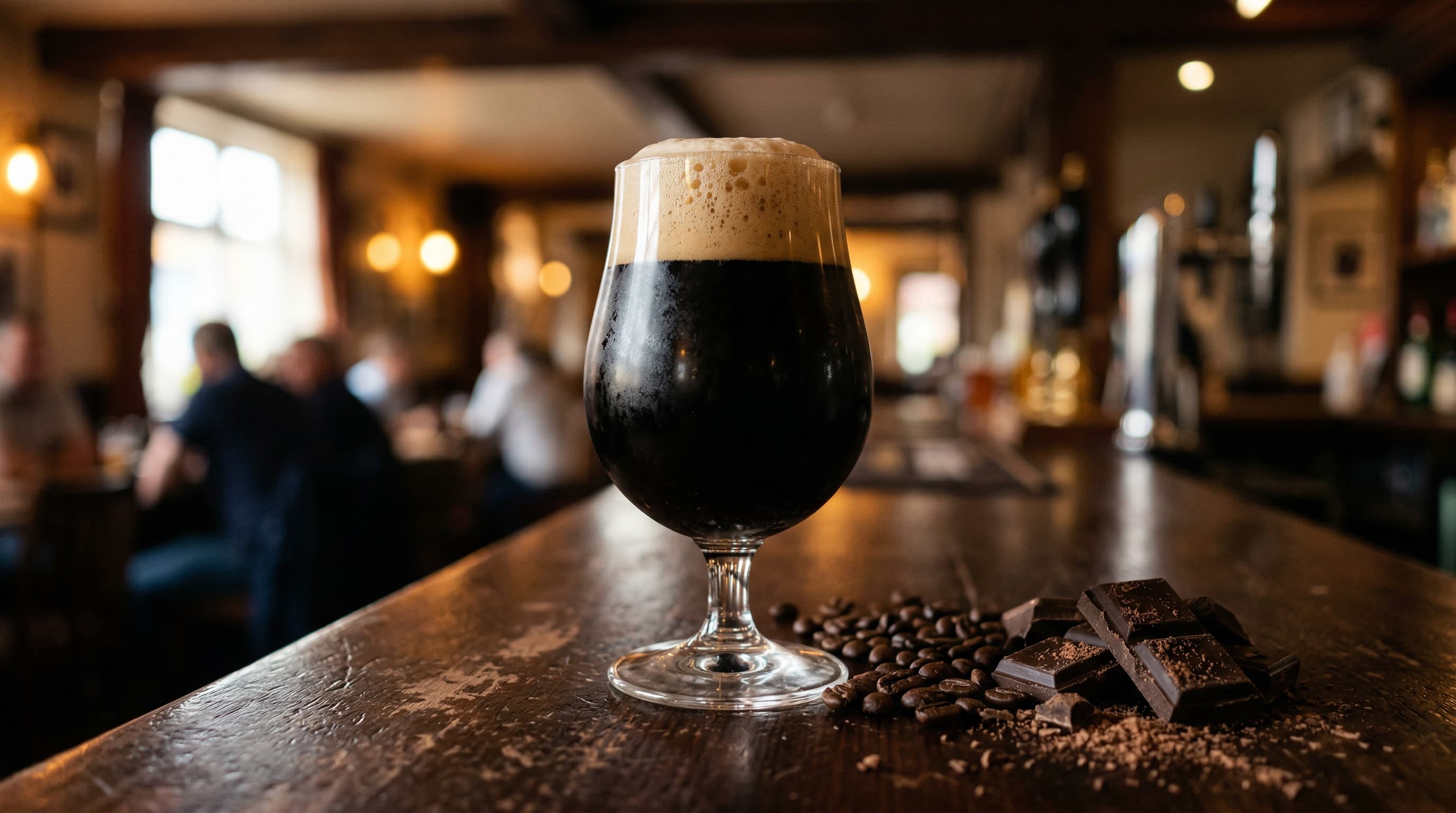
Stouts are arguably the best thing to happen to alcohol-free beer. The reason is straightforward: alcohol-free stout flavour comes from roasted malts, coffee and chocolate, built through Maillard browning, pyrazines and Strecker aldehydes during the kilning of dark malts. These compounds are robust and punchy regardless of whether alcohol is present. A stout's flavour matrix doesn't lean on ethanol as a crutch.
Guinness 0.0 is the obvious example. It's brewed as full-strength Guinness, then cold-filtered to remove the alcohol without thermal stress. The story of how Guinness cracked the alcohol-free pub game is a masterclass in dealcoholisation done well. It's not a perfect clone of the original (the body is slightly thinner) but the roasted coffee and dark chocolate character lands with genuine authority.
Big Drop's Galactic Milk Stout takes a completely different route. Rather than dealcoholise a full-strength beer, Big Drop brews naturally to 0.5% using less grain than a standard stout, and adds lactose (an unfermentable milk sugar) to restore body, sweetness and creamy mouthfeel. No alcohol was ever there to remove. It's one of the most reliable alcohol-free stouts you can pick up for exactly that reason.
**4-6%**
Typical ABV of a standard beer, the flavour gap that alcohol-free brewing has to close
0.5%
The industry threshold most brands and markets use for "alcohol-free", [see how 0.0% and 0.5% actually compare](/blog/zero-point-zero-vs-zero-point-five-explained)
“"Alcohol-free stout flavour comes from roasted malts, coffee and chocolate, built through Maillard browning, pyrazines and Strecker aldehydes during the kilning of dark malts. These compounds are robust and punchy regardless of whether alcohol is present."”
The alcohol-free lager problem
Lagers rely on a clean, crisp profile. There's nowhere to hide. When you remove the alcohol from a Pilsner, you expose every flaw: the malty sweetness that ethanol was quietly masking, the lack of body, the missing "zing" that carbonation alone can't provide. Sensory research comparing 5% and 0% lager backs this up directly. Body and warming drop sharply, and 0% samples are perceived as maltier and less fruity than the full-strength version.
That's the alcohol-free lager problem in a nutshell. The flavour gap is huge and the style has no architecture to cover it. Budget AF lagers end up tasting vaguely watery and cloyingly sweet.
Heineken 0.0 fights back with vacuum distillation. Removing alcohol at reduced pressure means ethanol boils off at low temperatures, protecting the delicate hop and malt character.
Asahi said at launch that Peroni Nastro Azzurro 0.0 takes a similar route, brewing the full-strength Peroni recipe at its Rome brewery and then putting the finished beer through its own dealcoholisation process. But these are the exceptions, not the rule. Most AF lagers just don't have enough going on to survive the switch.
IPAs: fixable, if brewers do the work
IPAs sit in an interesting middle ground. Remove the alcohol and you lose the hop aroma: the citrus, pine and floral notes that make an IPA an IPA. Research published in J. Agric. Food Chem. found that thermal dealcoholisation can strip up to 100% of certain key fermentation aroma compounds. Worse, the bitterness that was balanced by alcohol's warmth suddenly feels harsh and one-dimensional.
Smart brewers have two fixes. The first is post-process dry-hopping. Adding fresh hops to the finished alcohol-free beer restores volatile aromatics the process stripped out.
The second approach avoids the loss altogether: brew to strength from the start using specialist fermentation control or tailored yeast strains, so the aroma is never blown off in a dealcoholisation step.
Athletic Brewing in the US says it uses a proprietary brewing method built specifically for non-alcoholic beer rather than dealcoholising a full-strength batch. Mash Gang in the UK is more direct about it, saying they control fermentation from the start to build complexity without overproducing alcohol, rather than brewing a normal beer and then stripping the soul out of it. Our best alcohol-free IPAs roundup leans heavily on brewers using both techniques.
What to actually buy
Stop reaching for alcohol-free versions of whatever you normally drink. Instead, think about which styles survive the process best:
- Stouts and porters: Almost always good. The flavour profile doesn't need alcohol, our best non-alcoholic stouts and porters picks is the shortcut.
- Wheat beers: Decent results. The clove-and-banana flavour signature comes from wheat-beer yeast chemistry that runs alongside fermentation rather than depending on alcohol. Erdinger's alcohol-free wheat beer is brewed with a top-fermenting wheat-beer yeast specially cultivated at the brewery.
- IPAs: Hit or miss. Look for brands that either dry-hop post-dealcoholisation or brew to strength with specialist yeast.
- Lagers: Only premium brands nail it. Skip anything cheap.
In the alcohol-free stout vs lager debate, the best alcohol-free beer isn't the one that tastes most like its alcoholic version. It's the one where the flavour was never depending on alcohol to begin with.